Research Areas
Optics and Light Source Technology Group
Biomedical Raman Imaging
Our research team is dedicated to developing cutting-edge biomedical imaging technologies. While traditional Spontaneous Raman techniques can identify molecular fingerprints by measuring chemical bonds through light scattering, they are hindered by extremely weak signals. This has long resulted in bottlenecks such as excessive measurement times and difficulty in observing dynamic systems.
To overcome these challenges, our team utilizes Coherent Raman techniques, which enhance signal intensity by approximately eight orders of magnitude compared to traditional methods. This technology offers several advantages, including being non-invasive and requiring no fluorescent labeling. Furthermore, it effectively addresses the issue of photobleaching typically caused by long-term excitation of fluorescent molecules, and is now widely applied in biological tissue imaging.
Biomedical Raman Imaging
Our research team is dedicated to developing cutting-edge biomedical imaging technologies. While traditional Spontaneous Raman techniques can identify molecular fingerprints by measuring chemical bonds through light scattering, they are hindered by extremely weak signals. This has long resulted in bottlenecks such as excessive measurement times and difficulty in observing dynamic systems.
To overcome these challenges, our team utilizes Coherent Raman techniques, which enhance signal intensity by approximately eight orders of magnitude compared to traditional methods. This technology offers several advantages, including being non-invasive and requiring no fluorescent labeling. Furthermore, it effectively addresses the issue of photobleaching typically caused by long-term excitation of fluorescent molecules, and is now widely applied in biological tissue imaging.
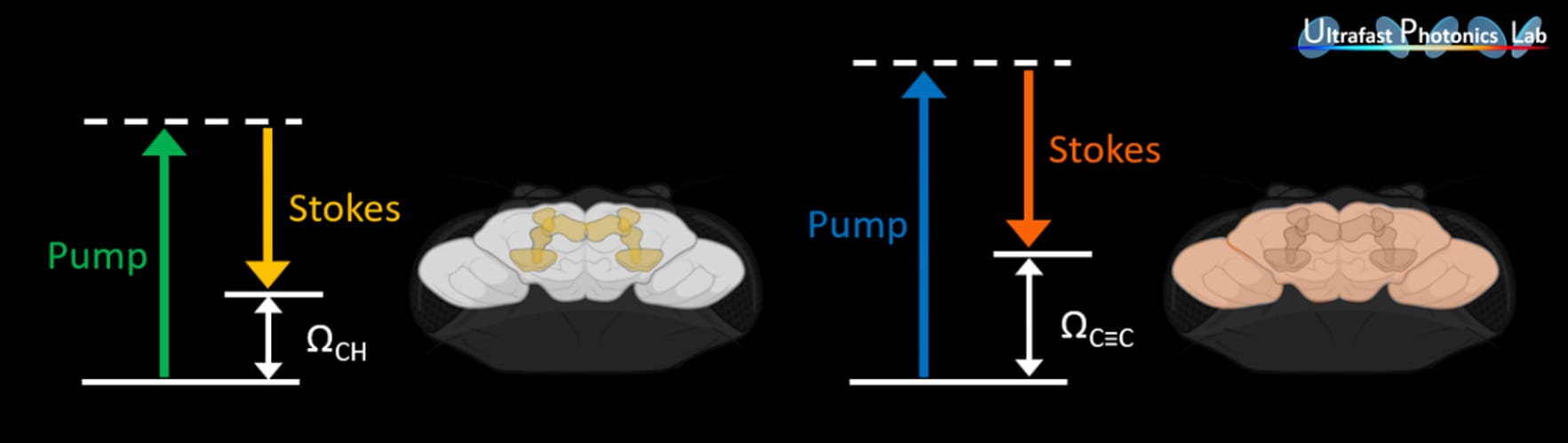
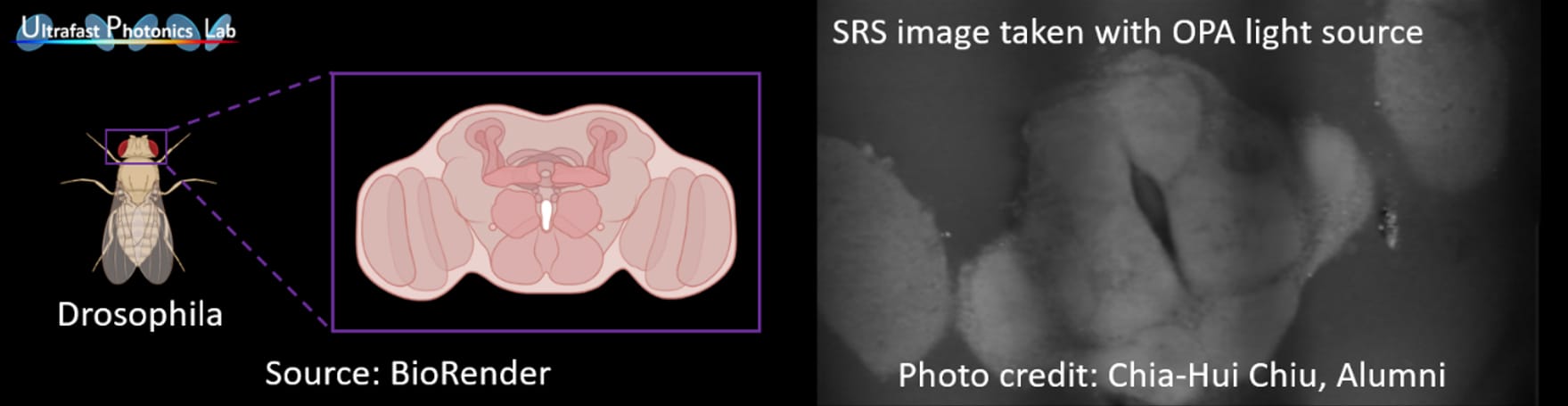
Additionally, our research team works in close collaboration with the Center for Brain Science, utilizing the innovatively developed Multi-plate continuum (MPC) technology to generate an ultra-broadband light source covering 600 to 1300 nm. This light source features high spectral energy density, and its operating wavelength and frequency difference can be precisely controlled using optical filters. Leveraging this novel light source, we are currently conducting in-depth research on key life science issues, such as the mechanisms of memory formation.
High-Repetition-Rate Transient Absorption Spectroscopy
The unique rotational and vibrational resonance frequencies of a molecule can be regarded as its chemical fingerprint. While sample compositions can be identified by measuring static absorption spectra, analyzing the evolution of molecular states during chemical reactions requires extremely high temporal resolution.
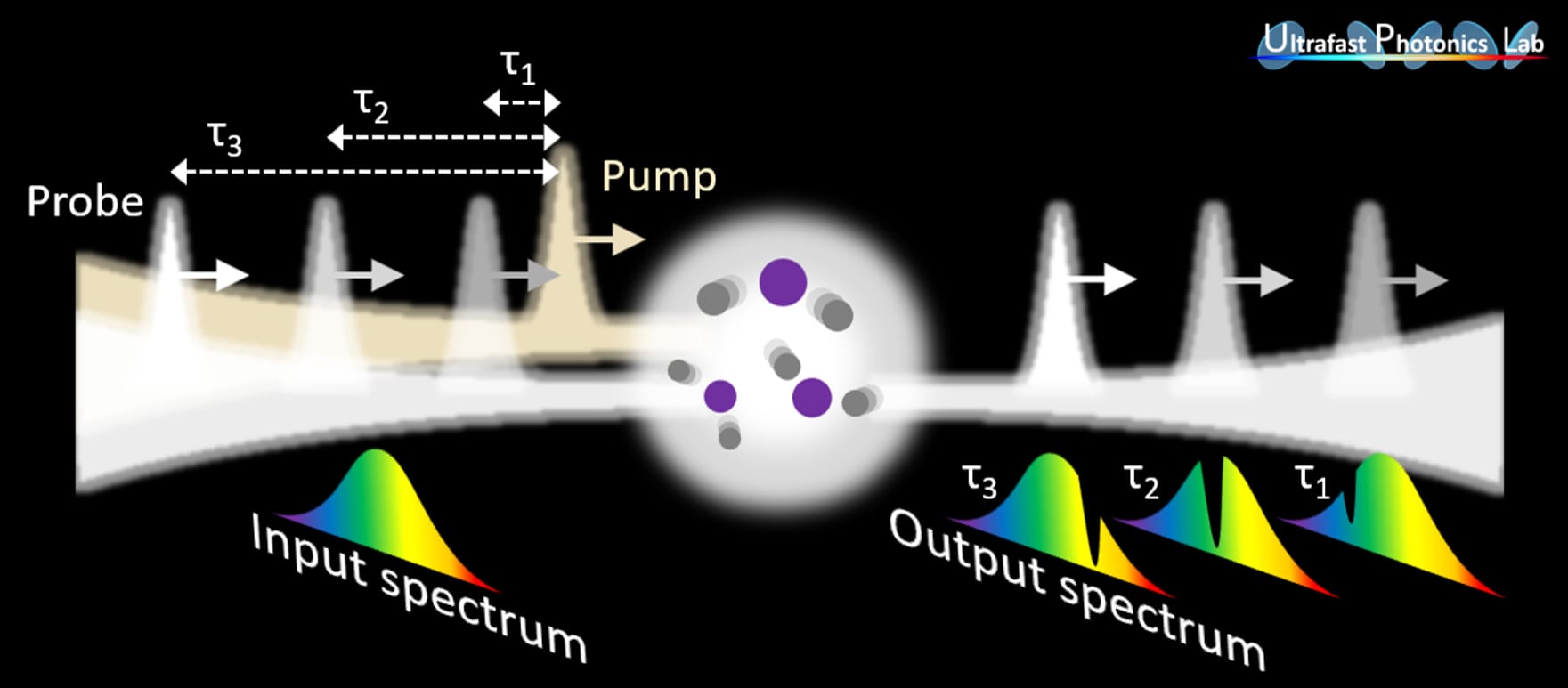
Our research team utilizes the “Pump-probe” measurement technique to capture subtle changes in the instantaneous absorption spectra of samples, thereby deducing the dynamical processes of molecular evolution or structural transformation.
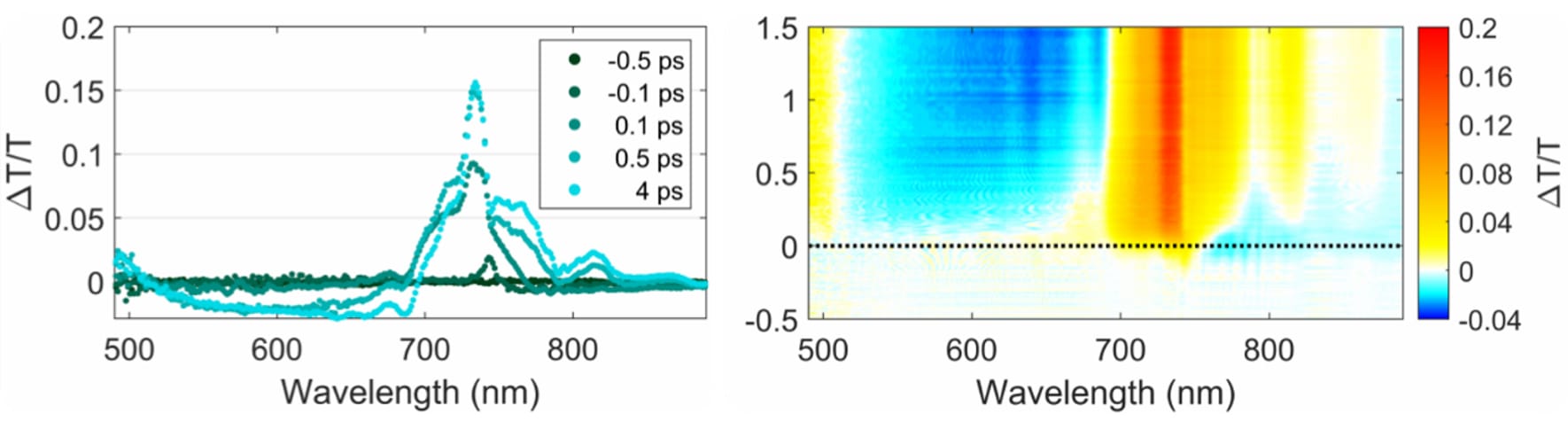
By integrating our internally developed MPC (Multi-plate continuum) supercontinuum white-light source and applying dispersion compensation technology for compression, we can achieve pulse widths of less than 5 femtoseconds (fs). This exceptional temporal resolution enables us to observe ultra-fast molecular dynamics. Currently, the team has successfully applied this technology to Titanium-sapphire (Ti:sapphire) laser systems and precisely measured the transmission spectral dynamics of Perovskite, a novel solar energy material.
Micro-machining
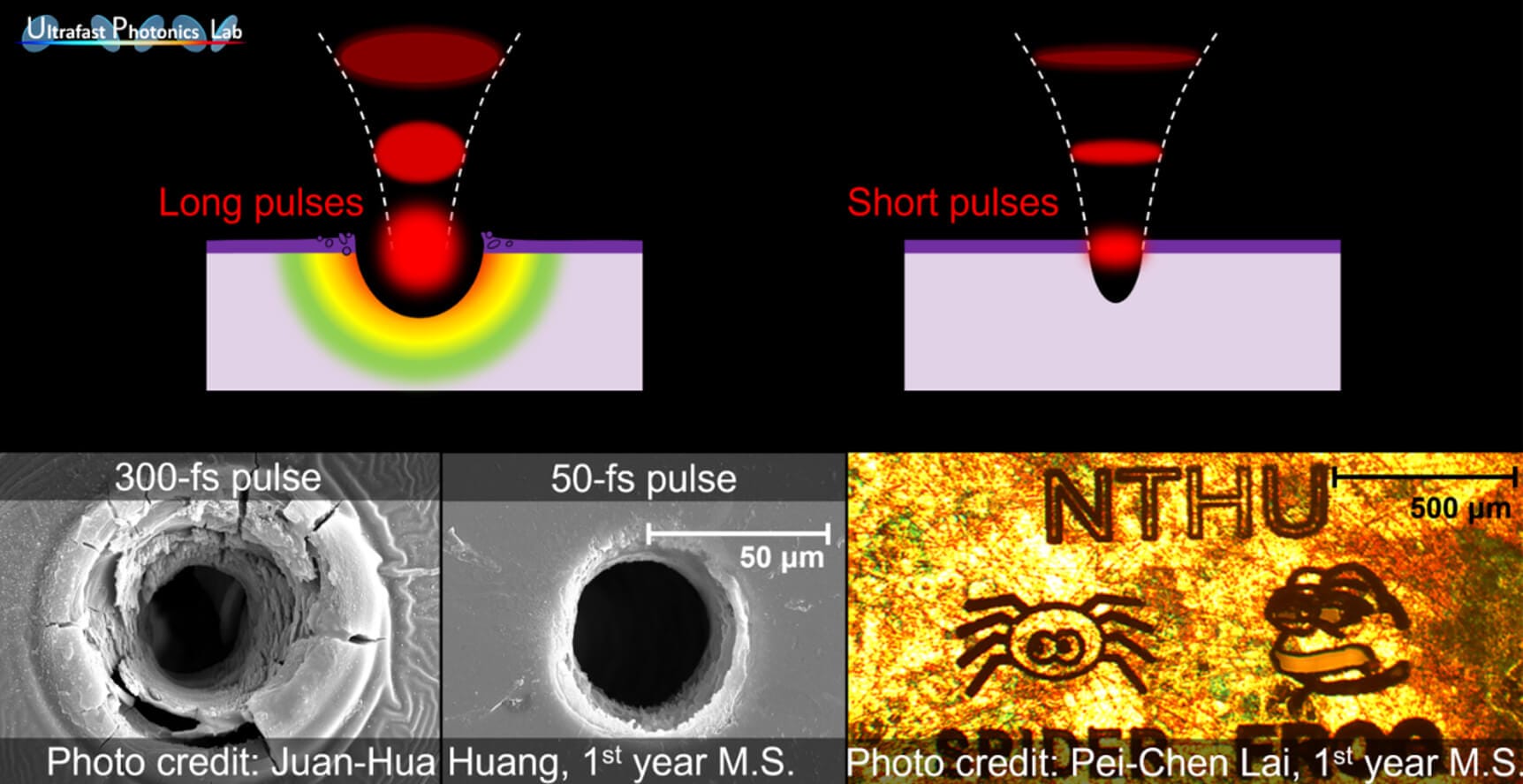
To meet the demands of electronic product miniaturization and advanced semiconductor manufacturing, our research team is deeply engaged in the field of femtosecond laser micro-machining. Because femtosecond lasers have extremely short pulse durations, they significantly suppress heat-affected zones (HAZ), offering processing precision far superior to traditional nanosecond or picosecond lasers.
Based on our experimental comparisons, processing with a 300 fs pulse still leads to protrusions or cracks around the drilled holes due to heat accumulation. In contrast, using a 50 fs pulse confines the reaction strictly to the laser-interacted area, achieving near-perfect precision. Our research team will continue to optimize ultrafast laser parameters to provide more efficient and precise processing solutions for the semiconductor industry.